Our Picks
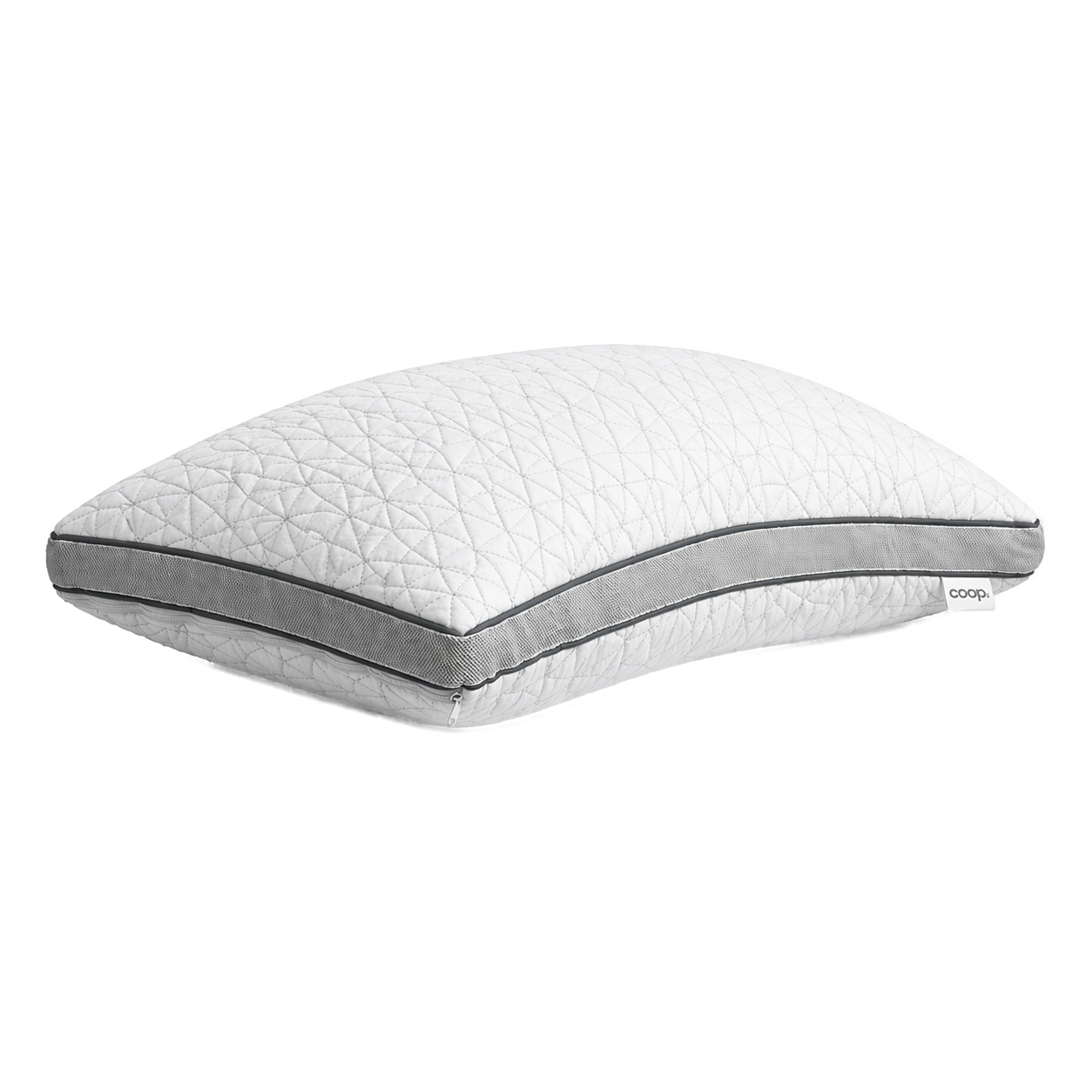
Coop Home Goods Adjustable Pillow

Hullo Buckwheat Pillow
Purple Harmony Pillow
Saatva Latex Pillow
Why Your Pillow Goes Flat
Most pillows are dead in 18 months. The fill compresses, the loft disappears, and you wake up with neck pain you didn't have six months ago. You buy a new one. Same thing happens again.
This isn't bad luck. It's the fill material doing exactly what cheap fill does: collapse under the weight of your head for eight hours a night, 365 nights a year. Polyester fiberfill, the stuff in most $15-$30 pillows, loses roughly half its loft within the first year. Memory foam lasts a bit longer but develops a permanent body impression by year two or three, especially if you sleep hot (heat accelerates foam breakdown).
The pillow industry counts on this. A pillow that lasts six years sells once. A pillow that lasts eighteen months sells four times.
Fill Types Ranked by How Long They Actually Last
Not all pillow fills are the same. Here's the honest breakdown:
Buckwheat hulls: 7-10+ years. The hulls don't compress because they're rigid organic shells, not foam or fiber. When they eventually break down, you replace the hulls for $15, not the whole pillow. This is as close to BIFL as a pillow gets.
Natural latex: 3-5+ years. Rubber tree sap, whipped into foam. It bounces back from compression overnight instead of slowly flattening. Latex resists dust mites and mold. It sleeps cooler than memory foam.
Shredded memory foam: 2-3 years. Better than solid memory foam because you can add or remove fill. Still breaks down from heat and nightly compression. If you run hot, subtract a year.
Polyester fiberfill: 6-18 months. The $20 pillow from Target. Fine for guests. Not a serious option for daily use.
Down/feather: 2-5 years depending on quality. High-fill-power goose down (700+) lasts longer but needs regular fluffing and washing. Feather pillows poke. Down alternatives flatten faster than real down.
Four Pillows Worth Buying
Coop Home Goods Eden — Best All-Around
The Eden is what most people should buy. It comes overstuffed with a mix of shredded memory foam and microfiber, and you remove fill until the loft fits your sleep position. Side sleepers keep more. Back sleepers pull some out. Stomach sleepers pull out a lot.
This adjustability is why it works. Most pillow complaints boil down to "it's too high" or "it's too flat." The Eden lets you fix that in five minutes.
The cover is bamboo-derived viscose rayon, which wicks moisture better than cotton. The fill is CertiPUR-US and Greenguard Gold certified, so you're not breathing off-gassing chemicals.
Honest downsides: The memory foam fill eventually compresses. Expect to add more fill (Coop sells refill bags) after about 18-24 months. The adjustability is a feature, but it's also Coop telling you the foam doesn't last forever.
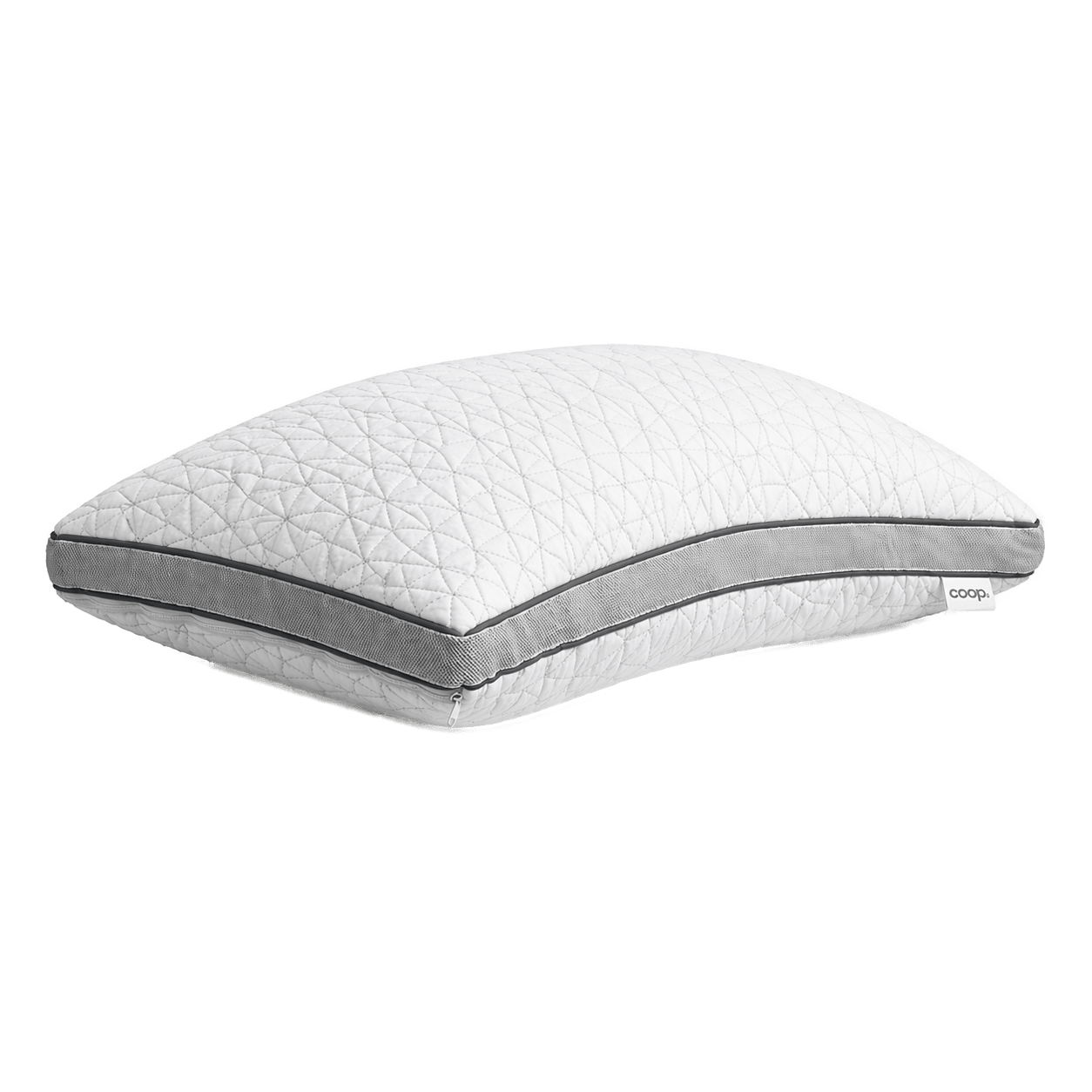
Coop Home Goods Adjustable Pillow
Pros
- Adjustable fill — remove or add to match any sleep position
- Bamboo-derived cover wicks moisture well
- CertiPUR-US and Greenguard Gold certified
Cons
- Memory foam fill compresses over 18-24 months
- Requires occasional refill bags ($15-20)
Hullo Buckwheat Pillow — The Actual BIFL Pick
If you want the pillow you never replace, this is it. Buckwheat hulls don't compress the way foam does. They shift, mold to your neck, and stay there. Ten-year-old Hullos still work. When the hulls finally break down, a $15 refill bag brings it back to new.
The support is firm. Very firm. If you like sinking into a soft cloud, this will feel like sleeping on a beanbag full of gravel for the first three nights. After the adjustment period, most people either love it or hate it. There's almost no middle ground.
Hullos sleep cool because air flows between the hulls, which foam physically cannot do. Side sleepers with neck pain tend to be the biggest converts because buckwheat fills the gap between your shoulder and head without collapsing.
Honest downsides: Heavy. A queen Hullo weighs about 10 lbs. It rustles when you move, like a quiet rain stick. Light sleepers who toss frequently may find the noise distracting. Not for anyone who wants a soft pillow.

Hullo Buckwheat Pillow
Pros
- Hulls last 7-10+ years without compressing
- Replaceable fill ($15) instead of replacing the whole pillow
- Sleeps cool — air flows between hulls
Cons
- Heavy (~10 lbs for a queen)
- Rustling noise when you move
- Very firm — not for soft-pillow lovers
Purple Harmony — Best for Hot Sleepers
Purple's Harmony pillow uses a solid Talalay latex core wrapped in a Purple Grid Hex elastomer layer. That grid creates air channels across the entire sleeping surface. If you wake up sweating on memory foam, this is the direct fix.
The latex core bounces back fully every morning. No body impression, no slow sinking. The "Tall" version works for most side sleepers; "Low" suits back and stomach sleepers.
Honest downsides: Expensive, and the one-year warranty is short for the price. Multiple Reddit users report the loft drops after 12-18 months. The "Tall" starts to feel more like a "Medium." Some people swear it's still comfortable even after settling. Others feel cheated. At $159+, the short warranty stings. If it holds up for you, it's the best-sleeping pillow on this list. If it doesn't, you're out $159 with no recourse after year one.

Purple Harmony Pillow
Pros
- Hex Grid layer creates airflow across entire surface
- Talalay latex core bounces back fully every morning
- Best cooling performance on this list
Cons
- One-year warranty is short for the price
- Loft drops after 12-18 months for some users
- Expensive with limited recourse after year one
Saatva Latex Pillow — Best for People Who Hate Weird Pillows
The Saatva feels the most like a "normal" pillow while still being made from durable material. It uses shredded natural Talalay latex inside an organic cotton cover. The feel is responsive and medium-firm. No buckwheat crunch. No grid technology. Just a well-made pillow that won't go flat for three to five years.
The outer cover zips off for machine washing, and the inner mesh lets the latex breathe. Saatva also offers a 45-day trial and a one-year warranty.
Honest downsides: Heavier than a polyester pillow (latex isn't light). Not adjustable. If the loft doesn't match your sleep position, you can't fix it by adding or removing fill. The price sits in the mid-range at ~$165, which is fair for natural latex but steep if you're used to $30 pillows.

Saatva Latex Pillow
Pros
- Feels like a normal pillow — no learning curve
- Organic cotton cover, machine-washable
- Natural Talalay latex lasts 3-5 years
Cons
- Not adjustable — fixed loft
- Heavier than polyester pillows
- Higher price point for a non-adjustable pillow
Two Things That Extend Any Pillow's Life
Use a pillow protector. Not a pillowcase. A protector. Your head produces sweat and oils every night. Those seep through the pillowcase into the fill, breaking down foam and attracting dust mites. A $12 zippered protector blocks that and adds a year or more to any pillow's useful life.
Wash or air out your pillow. Buckwheat pillows: unzip and sun-dry the hulls twice a year. Latex: spot clean and air out monthly. Memory foam: never put it in a washing machine. It absorbs water, grows mold, and dies. Follow the tag, not the internet.
Which One to Buy
Buy the Coop Eden if you want one pillow that adjusts to any sleep position. Expect to refill it in two years.
Buy the Hullo if you want the pillow you'll still be using in 2035. Accept the weight and the noise.
Buy the Purple Harmony if you sleep hot and nothing else has fixed it. Use the trial period aggressively.
Buy the Saatva Latex if you want something that feels normal, lasts 3-5 years, and doesn't require you to learn a new way of sleeping.
A $20 pillow replaced four times in five years costs $80 and gives you four rounds of neck pain while the new one breaks in. A $70-$165 pillow bought once does the job better for longer. Pick the fill type that matches how you sleep. Ignore thread count, marketing about "cooling gel," and anything that says "hotel quality."