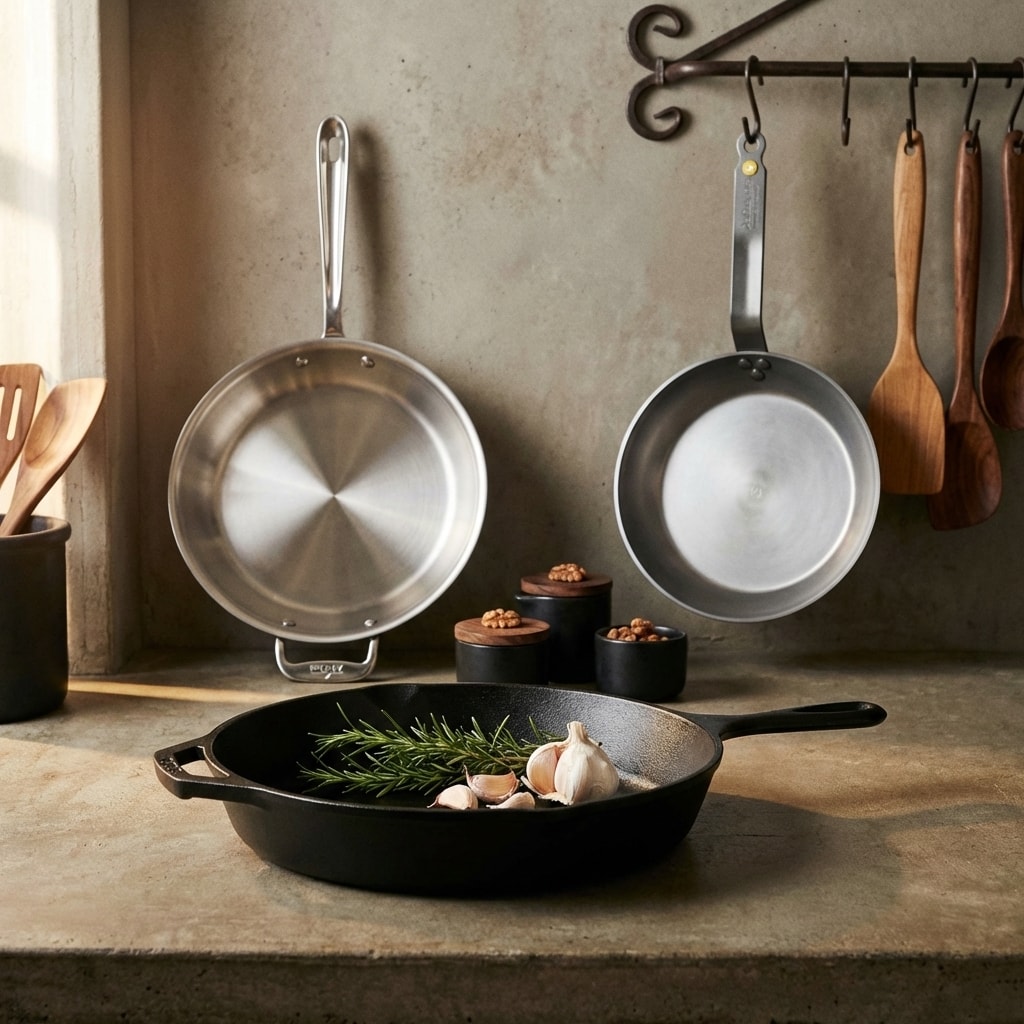
Our Picks
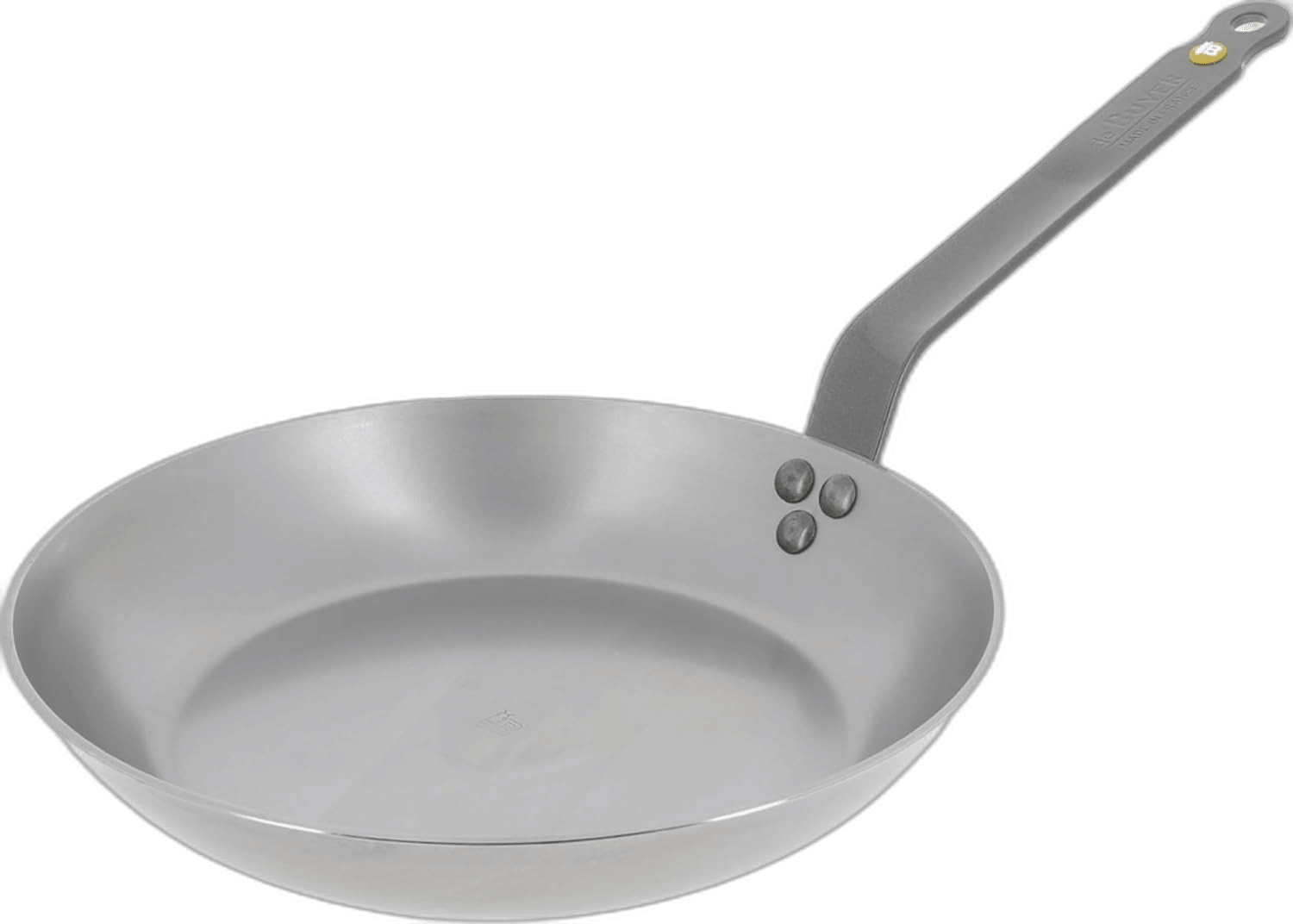
De Buyer Mineral B Pro (11")
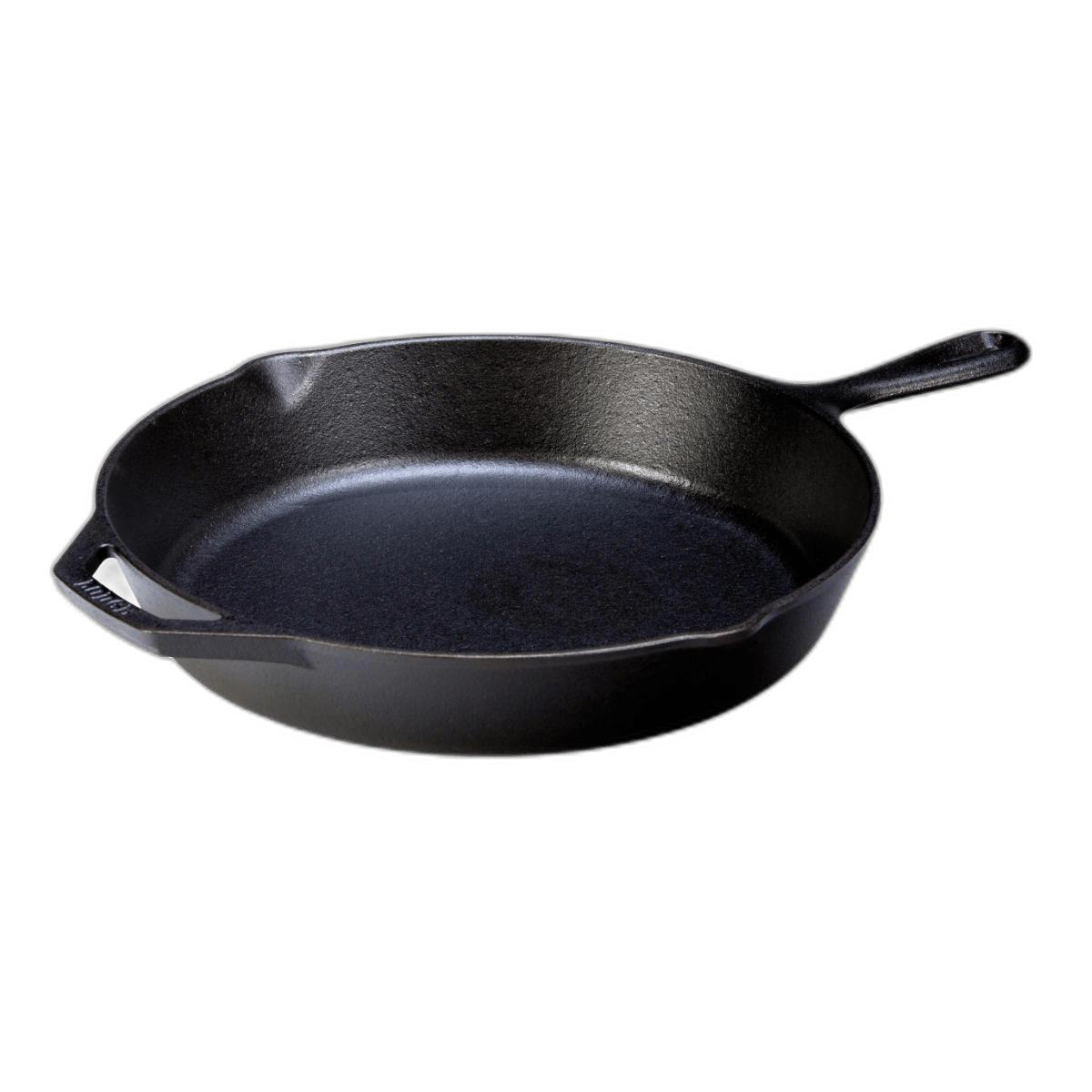
Lodge Cast Iron Skillet (12")
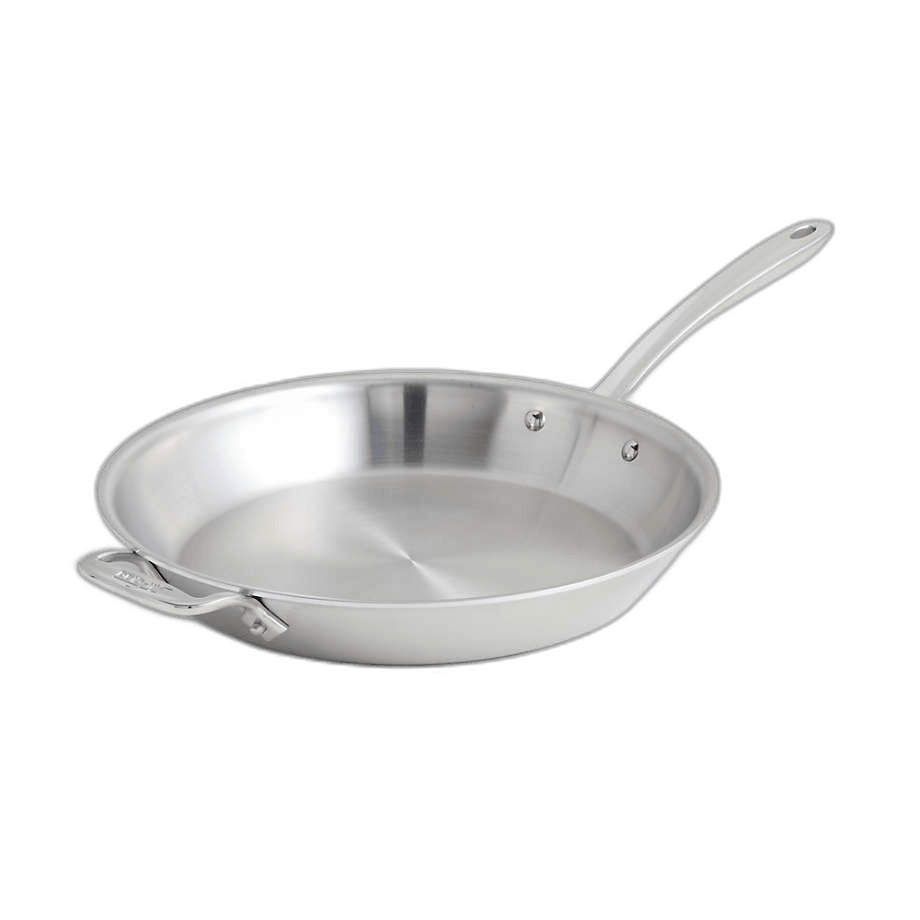
All-Clad D3 Stainless Steel (12")
You Don't Own a Non-Stick Pan. You Rent It.
Count the non-stick pans you've thrown away in the last ten years. Two? Four? More?
Every single one followed the same arc. You unpacked it, marveled at how eggs slid around, used it gently for six months, noticed the first scratch, watched the coating dull, and eventually tossed it when food started cementing itself to the surface. Then you bought another one.
That cycle isn't a defect. It's the business model.
PTFE coatings — the polymer behind Teflon and every generic "non-stick" surface — degrade through normal use. Metal utensils accelerate it. High heat accelerates it. Dishwashers accelerate it. But even if you baby the pan with silicone spatulas and hand-washing, the coating still breaks down through the simple mechanical abrasion of food particles sliding across it. The timeline is 2 to 5 years for a well-treated pan. Less for a cheap one.
Here is what that cycle actually costs you. A decent non-stick skillet runs $40 to $80. Over a 20-year cooking life, you'll buy somewhere between 4 and 10 of them. Call it $200 to $600, and every single one ends up in the same place: a landfill, where the PTFE polymer will sit intact for centuries because it's a fluoropolymer — a "forever chemical" by the definition used in every EPA and PFAS regulation currently on the books.
Meanwhile, the 12-inch carbon steel pan hanging in a French bistro kitchen right now has been in service since 2003. It gets better every year. The seasoning is darker, smoother, and more non-stick than the day it arrived. Nobody is planning to replace it. Nobody ever will.
That's the fundamental difference. Non-stick pans are a consumable. Carbon steel, cast iron, and stainless steel are infrastructure.
The Three-Pan System: What Restaurants Already Know
Walk into any professional kitchen — not the Instagram ones with copper hanging from the ceiling, but a working line kitchen that cooks 400 covers a night — and you will find exactly three types of pans.
Carbon steel for anything that needs a fast, hot sear with nimble control. Eggs. Fish. Stir-fry. Thin-cut proteins.
Cast iron for anything that needs sustained, brutal heat. Thick steaks. Cornbread. Deep searing where you want the pan to hold its temperature when cold food hits the surface.
Stainless steel for anything acidic or liquid-heavy. Tomato sauces. Pan sauces with wine or vinegar. Anything you need to deglaze, because fond (those brown bits on the bottom) releases cleanly from stainless but bonds permanently to carbon and iron.
That's the entire system. Three materials. Three jobs. No overlap, no redundancy.
None of these pans have coatings. None of them degrade. None of them will ever need to be replaced because the cooking surface wore out. A carbon steel pan from the 1970s performs identically to one made yesterday — actually, it performs better, because 50 years of seasoning have turned it into the most naturally non-stick surface that exists outside of a chemistry lab.
The total cost to build this three-pan kitchen? About $250. That's less than one premium non-stick set from Williams Sonoma. And it's the last $250 you'll ever spend on pans.
Carbon Steel: Your Teflon Replacement
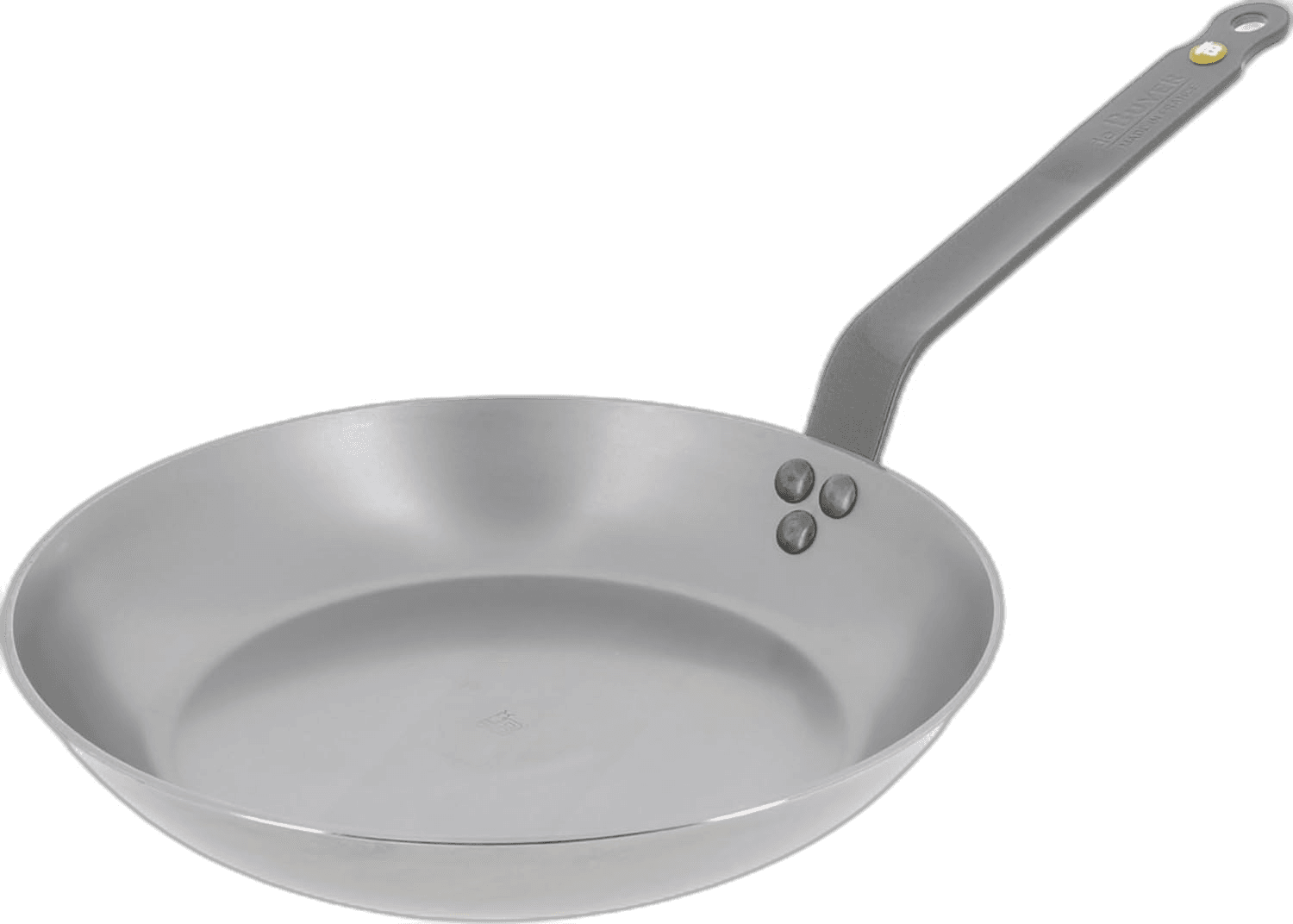
De Buyer Mineral B Pro (11")
Carbon steel is, structurally, the closest thing to non-stick cookware that doesn't involve a synthetic polymer. When properly seasoned, eggs slide. Crepes release. Fish skin crisps without tearing. It does the exact job that Teflon was designed to do, except the surface improves with use instead of decaying.
The material itself is simple: 99% iron, 1% carbon. It's thinner and lighter than cast iron, which means it heats up faster, responds to temperature changes more quickly, and doesn't require two hands to flip a pancake. A seasoned 11-inch carbon steel pan weighs about 4.4 lbs. A comparable cast iron pan weighs nearly double that.
The Seasoning Learning Curve
Here is the part nobody mentions in the glowing Reddit threads: the first two weeks with a carbon steel pan are genuinely annoying. Your initial seasoning will be patchy. Eggs will stick in spots. You will feel like you made a mistake.
You didn't. Carbon steel seasoning is not an event — it's a process. Every time you cook with fat, a microscopically thin layer of polymerized oil bonds to the iron surface. Over days and weeks, these layers build into a dark, smooth, naturally non-stick coating that is physically bonded to the metal at a molecular level. It is not sitting on the surface like Teflon. It is the surface.
The practical advice: during your first two weeks, cook fatty foods. Sauté onions in butter. Fry bacon. Sear chicken thighs skin-side down. Each of these sessions deposits more seasoning than a dozen stovetop flaxseed-oil rituals. By day 14, you'll be sliding eggs with no resistance.
Why De Buyer Over Everything Else
There are a lot of carbon steel pans on the market. Most of them are fine. But the De Buyer Mineral B Pro stands apart for two reasons. First, the cast stainless steel handle — most carbon steel pans use epoxy-coated handles that limit oven use, or long French-style handles that make storage awkward. The Mineral B Pro's handle is fully oven-safe to 500°F with no restrictions. Second, the pan is made in France from a single piece of drawn steel. There are no welds, no joins, no structural weak points. It will survive a century of daily use if you let it.
For the complete step-by-step seasoning process (stovetop method, oven method, and rescue procedures), read our companion guide: How to Season a Carbon Steel or Cast Iron Pan.
Cast Iron: The One Pan That Outlives Everything
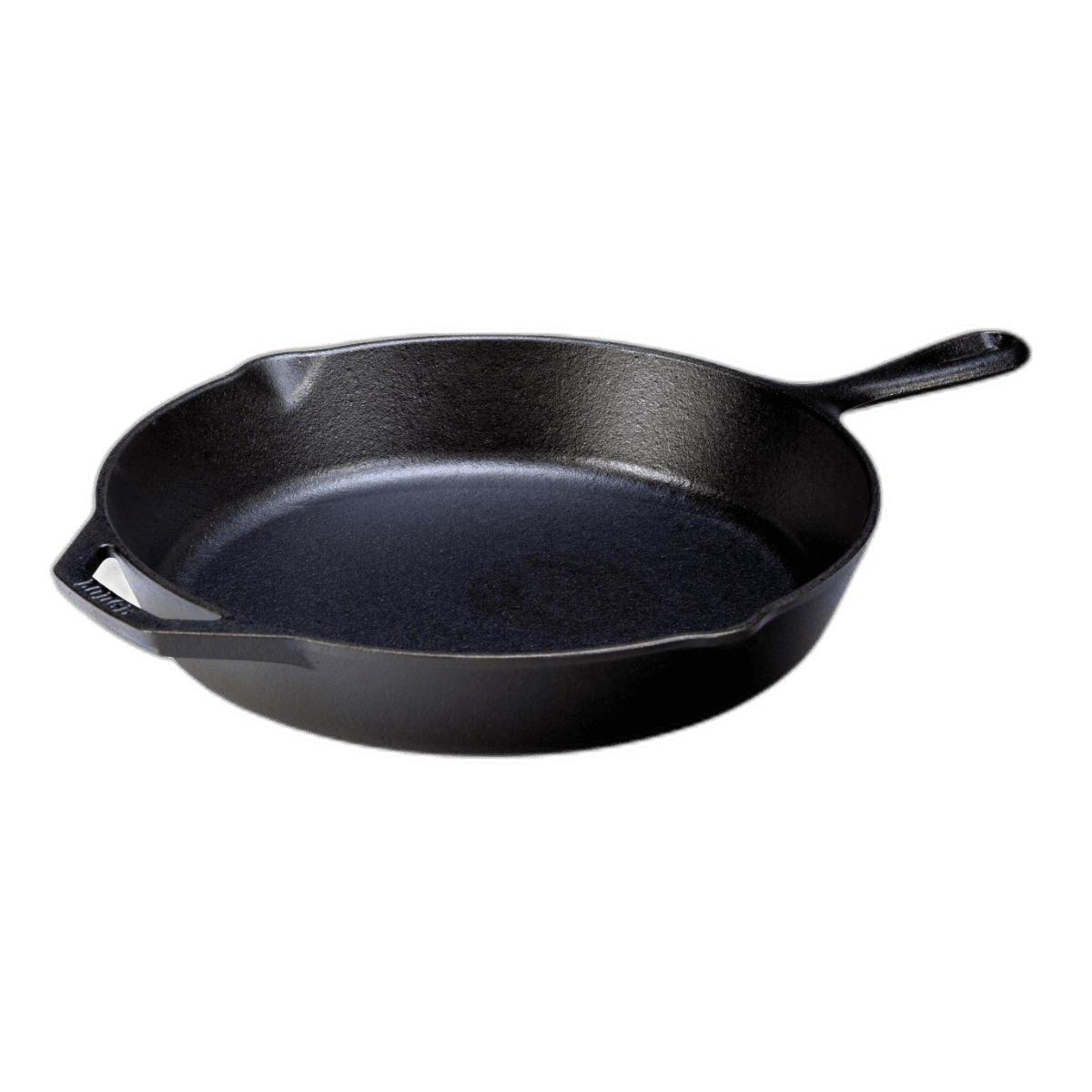
Lodge Cast Iron Skillet (12")
Cast iron is not delicate. It is not complicated. It is a 8-pound slab of iron that has been doing the same job since the 18th century, and it does that job better than any material science has produced since.
The physics are straightforward: cast iron has extremely high volumetric heat capacity. Once it's hot, it stays hot. When you drop a cold 16-ounce ribeye onto a screaming cast iron skillet, the surface temperature barely flinches. On a non-stick pan, that same steak would drop the surface temp by 100-150°F instantly, and you'd get a gray, steamed exterior instead of a sear.
Cast iron also moves seamlessly from stovetop to oven. Sear pork chops on the burner, slide the whole pan into a 400°F oven to finish. Bake cornbread directly in it. Roast a whole chicken. Make deep-dish pizza. It's the most versatile single piece of cookware that exists.
The Lodge Is the Only Recommendation
There are expensive cast iron options — Finex, Butter Pat, Smithey, Le Creuset. They're beautiful objects. They make great gifts. But for cooking performance, a $30 Lodge does the same job. The iron is the same. The seasoning is the same. The physics are the same.
Lodge has been making cast iron in South Pittsburg, Tennessee since 1896. Their 12-inch skillet ships pre-seasoned and ready to use. You don't need to do anything special on day one except cook with it.
A note about weight: the 12-inch Lodge weighs about 8 lbs. That's heavy. If you have wrist issues or limited grip strength, consider the 10.25-inch model (~5.5 lbs) instead. It gives up some cooking surface but handles much more comfortably for daily use.
Stainless Steel: The Third Piece of the Puzzle
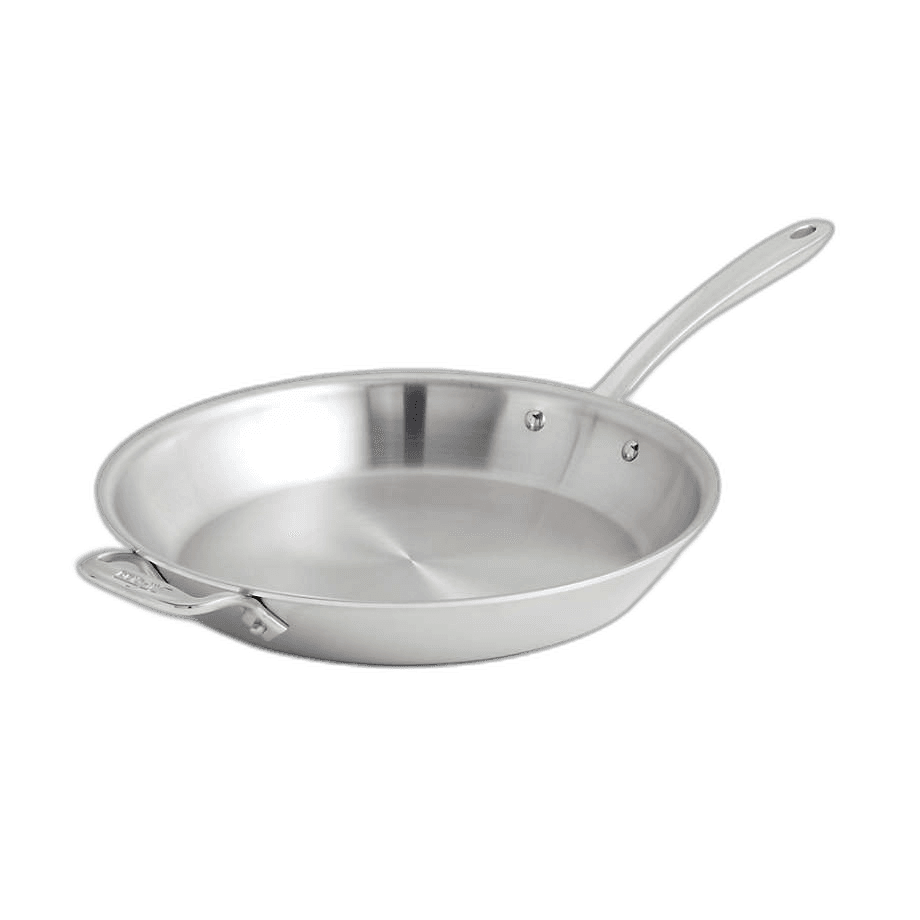
All-Clad D3 Stainless Steel (12")
Carbon steel and cast iron have one shared weakness: they're reactive. Cook a tomato sauce in a carbon steel pan and the acid will strip your seasoning, discolor the food, and leave a metallic taste. Same with wine reductions, citrus-based sauces, or anything with vinegar.
Stainless steel is completely non-reactive. It doesn't care what you cook in it. This makes it essential for the dishes that your other two pans can't handle — and in a well-run kitchen, that's about 30% of what you cook.
The Sticking Problem (And How to Solve It)
Stainless steel's reputation as a "food sticks to everything" material is earned but solvable. The technique is simple and scientific:
1. Preheat the empty pan on medium heat for 2-3 minutes. Stainless steel expands when heated, and the microscopic pores in the surface close up. This creates a smoother cooking surface before food ever touches it.
2. The water test. Flick a few drops of water into the pan. If the water sizzles and evaporates immediately, the pan isn't hot enough. If the water breaks into tiny beads that roll around the surface like mercury — that's the Leidenfrost effect, and your pan is ready.
3. Add fat, then food. Oil or butter goes in after the pan is preheated, not before. The fat fills any remaining surface irregularities and creates a barrier between the food and the metal.
Follow those three steps and chicken thighs release cleanly. Salmon doesn't tear. Fond develops beautifully on the surface instead of turning into a burnt mess, and you can deglaze with wine to build a pan sauce in 90 seconds.
Why All-Clad D3
All-Clad's D3 line uses three-ply bonded construction: a layer of aluminum sandwiched between two layers of 18/10 stainless steel. The aluminum core conducts heat evenly across the entire cooking surface — eliminating the hot spots that plague cheaper, disc-bottom stainless pans. The result is even browning, consistent sauce reduction, and no scorching.
At ~$140, it's the most expensive pan in this three-piece system. It's also the one with a lifetime warranty from a company that's been honoring it since 1971. The pan your parents got as a wedding gift? That's this pan. And it still works.
The Transition Plan: Week by Week
Week 1: Start with the cast iron.
Cook everything you normally cook in the non-stick — except eggs. Use more butter or oil than you think you need. Your goal this week is to build comfort with a heavier pan and learn how heat behaves differently in cast iron (slower to heat, holds temp longer, needs lower flame settings than you're used to).
Cook this week: Burgers, grilled cheese, seared chicken thighs, roasted vegetables, stovetop cornbread.
Week 2: Add the carbon steel.
Season it with the thin-layer stovetop method (oil on, wipe nearly all of it off, heat until it smokes, repeat 3-4 times). Then start cooking fatty foods: bacon, sausages, sautéed onions in butter, fried rice. By the end of week 2, try eggs. If they stick a little, cook more bacon and try eggs again tomorrow. The seasoning is building.
Cook this week: Bacon, stir-fry, fried eggs (attempt daily), seared fish.
Week 3: Add the stainless steel.
Practice the preheat-water test-fat sequence on day one. Make a simple pan sauce: sear chicken in the stainless, remove, deglaze with white wine, scrape the fond, add butter, pour over chicken. That experience — watching fond release cleanly from stainless — is the moment you understand why this pan exists.
Cook this week: Pan sauces, tomato-based pastas, seared salmon with lemon butter, any recipe that involves wine or vinegar.
Week 4: Put the non-stick in the donation box.
By now, your carbon steel handles eggs. Your cast iron handles searing. Your stainless handles everything acidic. There is literally nothing left for the non-stick to do. It's not earning its cabinet space anymore.
If you're nervous, keep one cheap 8-inch non-stick as a security blanket for particularly delicate crepes or thin omelets. No shame in that. But within a month, you'll forget it's there.
The Money: Non-Stick vs. BIFL Over 20 Years
Let's run the numbers honestly.
The Non-Stick Path
A decent non-stick skillet — not a dollar-store pan, a real one from T-fal, Calphalon, or Cuisinart — costs $40 to $80. Average useful life: 3 years being generous. Over 20 years, you'll buy 6 to 7 pans per size.
If you maintain two non-stick sizes (a 10-inch and a 12-inch), that's 12-14 pans over two decades. Total: $480 to $1,120. Every single one landfilled.
The Three-Pan BIFL Path
PanCostReplacementDe Buyer Mineral B Pro (11")$80NeverLodge Cast Iron (12")$30NeverAll-Clad D3 Stainless (10")$140NeverTotal$250$0 ongoing$250, once. No replacements. No ongoing costs. No landfill waste. The carbon steel pan needs occasional re-seasoning (free — it just takes cooking with it). The stainless steel needs Bar Keeper's Friend once a month ($4 a can, lasts a year). The cast iron needs nothing except to be dried and stored.
The break-even point against non-stick is approximately year 4. After that, every year is savings.
The Health Angle: What About PFAS?
We're not going to fear-monger here. The science on PTFE cookware and human health exposure is genuinely nuanced, and the dose-response relationship is still being studied.
Here is what we do know, stripped of both industry PR and activist exaggeration:
PTFE itself, intact, is generally inert. At normal cooking temperatures (below 400°F), a well-maintained non-stick surface doesn't release meaningful quantities of anything harmful into food. The FDA's position, as of 2025, is that the risk from intact PTFE coatings is negligible.
The problems start at the edges. Scratched, chipped, or overheated PTFE can release microplastic particles and, at temperatures above 500°F, fumes that are toxic enough to kill pet birds within minutes (a phenomenon documented enough to have a name: "Teflon toxicosis" in avian medicine). The old manufacturing chemical PFOA was phased out years ago, but its replacements — GenX and other short-chain PFAS — carry similar environmental concerns and are under active EPA scrutiny.
The legislative trajectory is clear. Minnesota banned the sale of cookware containing intentionally added PFAS in 2025. Colorado, Maine, Connecticut, and Vermont have similar bans taking effect between 2026 and 2028. The regulatory direction is unmistakable: PFAS in consumer products is being phased out.
You don't need to panic about the non-stick pan you used last night. But if you're buying new cookware today, there's no rational argument for investing in a material that multiple state governments are actively banning when the alternative — bare metal — performs better, costs less over time, and generates zero chemical exposure concerns.
Three Pans. One Transition. Done.
The post-Teflon kitchen is not a trend. It's not a TikTok aesthetic. It's not a sacrifice.
It's a permanent upgrade that professional cooks made decades ago, and the only reason home cooks haven't followed is because non-stick marketing is exceptionally good at selling you a product designed to fail and be repurchased on a 3-year cycle.
Break the cycle. Buy the De Buyer for eggs and fast cooking. Buy the Lodge for searing and baking. Buy the All-Clad for sauces and acidic foods. Season the carbon steel over two weeks. Learn the water-drop test for the stainless.
Total investment: $250. Total replacements over the next 20 years: zero.
Your grandchildren will cook with these pans. That's not marketing. That's metallurgy.